

If you sell SEO for a living, we need to have an honest conversation.
I've done this for almost 20 years. My family relies on this income. Nobody wants SEO to survive more than I do.
But it's changing in front of us. You can bury your head in the sand, or you can adapt.
What is the future of SEO? SEO is moving from clicks to visibility. AI answers in Google and ChatGPT mean fewer searches end in a visit, and AI now automates much of the work agencies used to charge for. SEO agencies that survive will sell outcomes instead of rankings: blended search (SEO plus paid) first, then a full-service agency of record, then a lean, fractional model built on their own AI systems.
Here's the short version:
- AI is hitting SEO from two sides: how people search, and how the work gets done.
- Stage 1, now: productize your SEO, deliver it with AI, add PPC and Local Service Ads, and sell leads instead of rankings.
- Stage 2, next: become the agency of record for everything that brings a client customers.
- Stage 3, later: a fractional model. You, a few department heads and an AI stack clients pay to use.
- Plan for the worst case. Assume your current service won't be needed, and build from there.
Why SEO Is Getting Harder To Sell
Rankings can go up while traffic goes down. That's the problem in one chart.
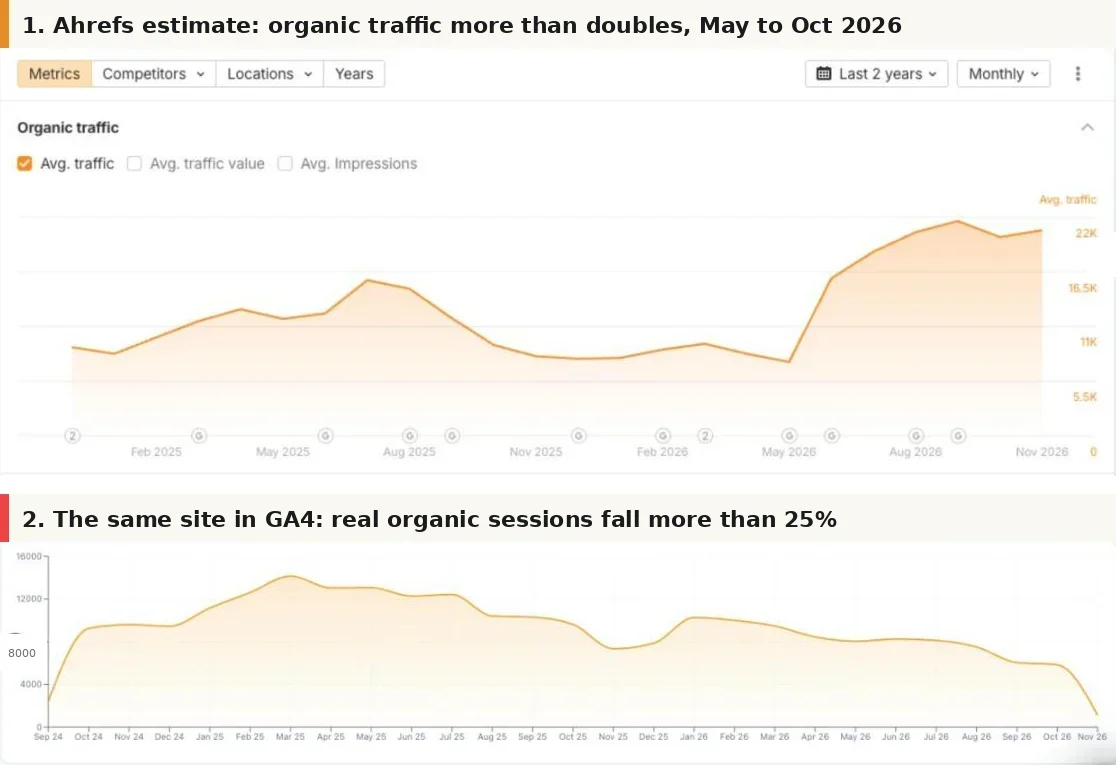
Here's a real client site. Ahrefs, which estimates traffic from rankings and search volume, shows organic traffic more than doubling. GA4, which counts real visits, shows it falling.
The old math was simple: rank first for a keyword with 1,000 searches, get most of those clicks. That math doesn't hold anymore.
Similarweb data reported by Digiday found zero-click searches on Google rose from 56% in May 2024 to nearly 69% by May 2025. People get their answer and leave.
So how do you look a client in the eye and promise traffic? You can't, ethically. That changes how you sell, how you price and how you set expectations.
I talk to 5 to 10 lawyers a week. More than half of them now say some version of: "I'm done with SEO. It doesn't work."
That's not a "build a better mousetrap" problem. There's less opportunity inside Google, full stop. More on why in why Ahrefs and Semrush traffic estimates are wrong.
Where Search Is Going: AI Agents
I think we'll all have an AI agent at our side soon, trained on our work and personal lives. That agent does the searching.
Search on Google today is noisy: ads, a Maps pack, Reddit, directories, 30 options to click.
An agent knows you. If you're going through a divorce, it knows your situation and your finances. It recommends one or two family lawyers, not 30.
The lawyer still gets the client. That's still the outcome of SEO. But there's far less search volume, fewer clicks and a much shorter list.
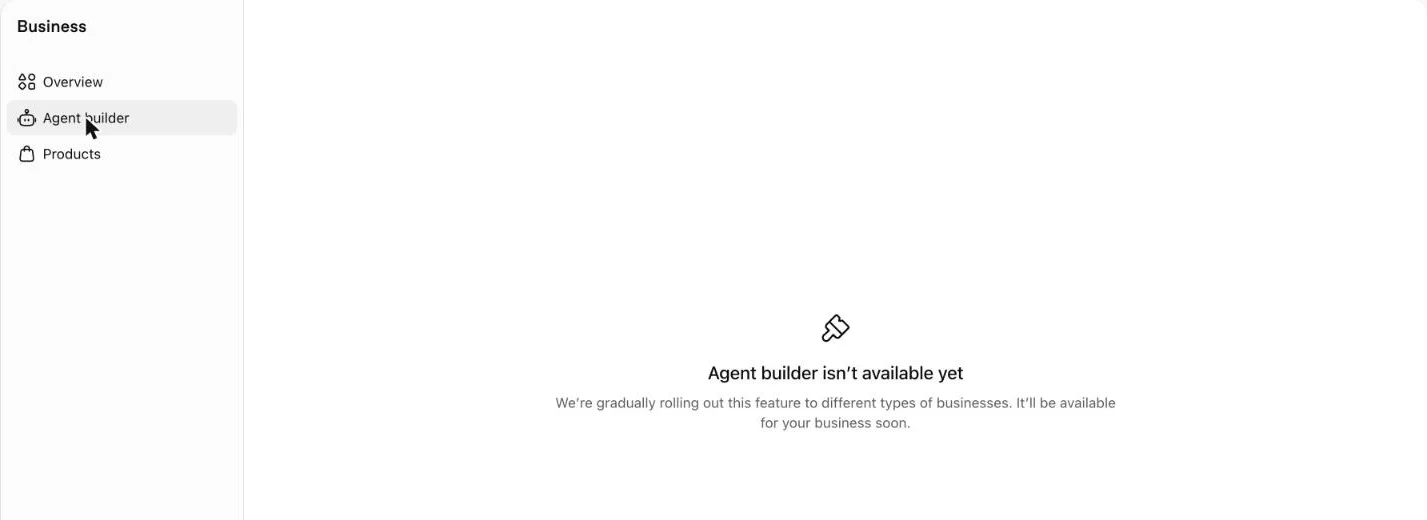
And it's already starting. ChatGPT now lets businesses claim a profile and is rolling out business agents that answer customer questions inside ChatGPT. Here's how ChatGPT Business Hub works.
Stop pledging allegiance to Google. Google doesn't care about you. Your client is the one who pays you.
The Scarier Part: AI Is Automating SEO Delivery
The bigger threat isn't how people search. It's that AI can now do much of the work we charge for.
Search will still exist, so there will still be a role for search specialists. A smaller one.
But AI is rolling up entry-level work across marketing, advertising and even law. If you think it only produces slop, you're not using it to its full extent.
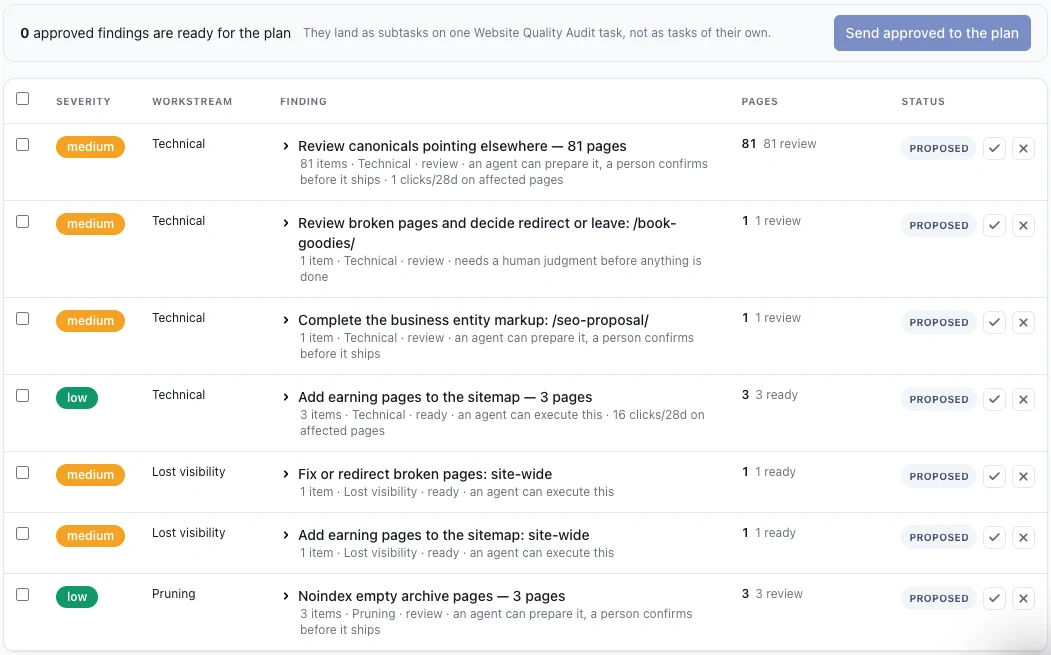
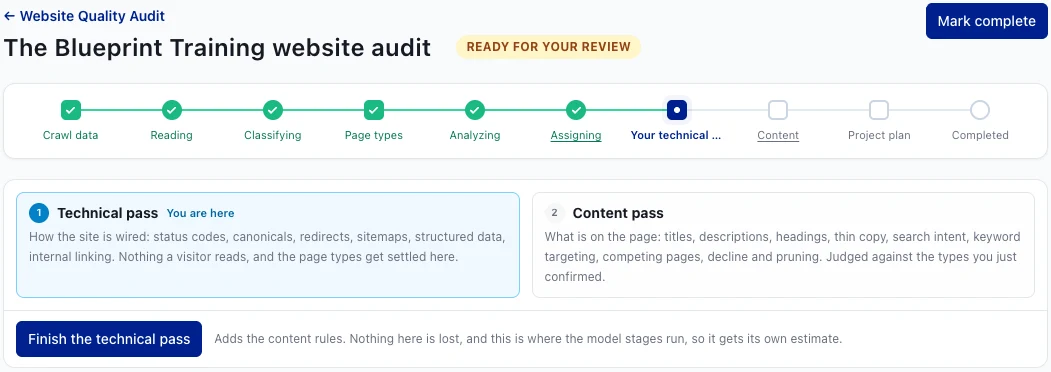
This screenshot is an audit our software ran on a real site. AI prepared every finding. A person approves each one before anything ships.
So here's how I want you to think about it. Assume that in three years, or one, or three months, your current service isn't needed.
If you assume the worst, you can build a real plan. Here's mine.
Stage 1: Move to Blended Search
Blended search means selling SEO, local SEO, PPC and Local Service Ads as one service, so the client gets leads in the first week. This is what you should be doing right now.
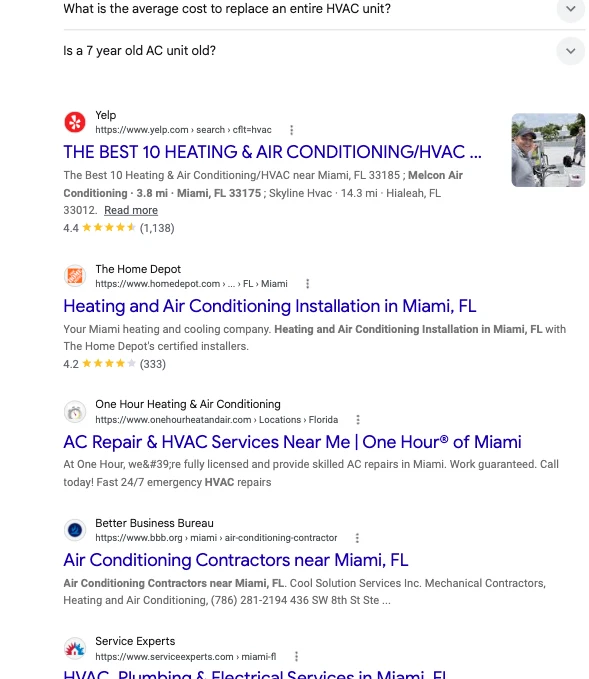
Search "HVAC near me" in Miami. Local Service Ads. Text ads. An AI Overview. The Maps pack, with an ad inside it. Then the organic results, led by Yelp and The Home Depot.
If you only do SEO, you're fighting for one or two spots under all of that.
Think of it like roulette. A skilled player spreads chips across the table. You don't put everything on red and hope. The full case is in blended search.
Pick Clients Who Can Pay for It
Blended search only works for clients with a high customer value, in an industry people still search for and AI can't replace.
| Business | What a customer is worth | Fit for blended search |
|---|---|---|
| Pressure washing | $200 to $300 | ✕ Can’t fund a retainer and ads |
| Roofing, HVAC, electrical | $5,000 to $30,000 | ✓ Pays for both |
Ask three questions:
- Do people still use Google or ChatGPT to find them?
- Is a customer worth enough to pay an agency and fund ads?
- Is the industry protected from AI?
Home services pass all three. A roof, an AC unit or a panel upgrade still needs a person, at least until the robots come.
I'll be honest: I'm not bullish on a lot of law practices over the next 5 to 10 years. AI will do much of what they sell.
Productize SEO and Run It With AI
Strip SEO down to a documented process for one type of client, then let AI run it with a person approving every step. That's how you cut the cost to deliver.
You can't productize SEO for an ecommerce store, a lawyer and a coffee shop at the same time. Every one is a different process. Pick one avatar.
Then document everything, from onboarding to link building. Once it's written down, AI can run it.
Here's how it works for us. One SEO specialist runs the whole process through Claude, connected to our client data in Agency OS.
- The analytics audit runs. Claude analyzes it. The specialist approves. Claude sets up the conversions.
- The technical audit runs: sitemaps, robots.txt, broken pages. The specialist decides what to fix. It goes into the client's plan.
- Content runs the same way.
It used to take four people. Now it's one person, with AI doing the assembly line.
Lower delivery cost doesn't mean lower margins. Your margins go up, and you can charge less. More on productizing your services.
Add Paid Ads With a Subcontractor
You don't need to know PPC. Hire a paid media contractor per account. It's the easiest marketing role to hire.
| Client pays today | Your fee | Goes to ads |
|---|---|---|
| $5,000 a month for SEO | $2,000 | $3,000 |
| $20,000 a month (personal injury) | $5,000 | $15,000 |
Our head of paid media started as a subcontractor. We paid him $250 to $1,000 per account, depending on ad spend. At 20 accounts, he came on full time.
Find yours on LinkedIn or Upwork. Interview ten, test three on your own site, keep one.
Then use the money the client already spends. You don't need a bigger budget. You need to move it from an SEO retainer into leads.
Here's the full playbook for adding PPC and LSAs to your SEO offer.
Sell the Outcome, Not Rankings
Clients don't care if the lead came from an ad or organic. They care about phone calls and form fills.
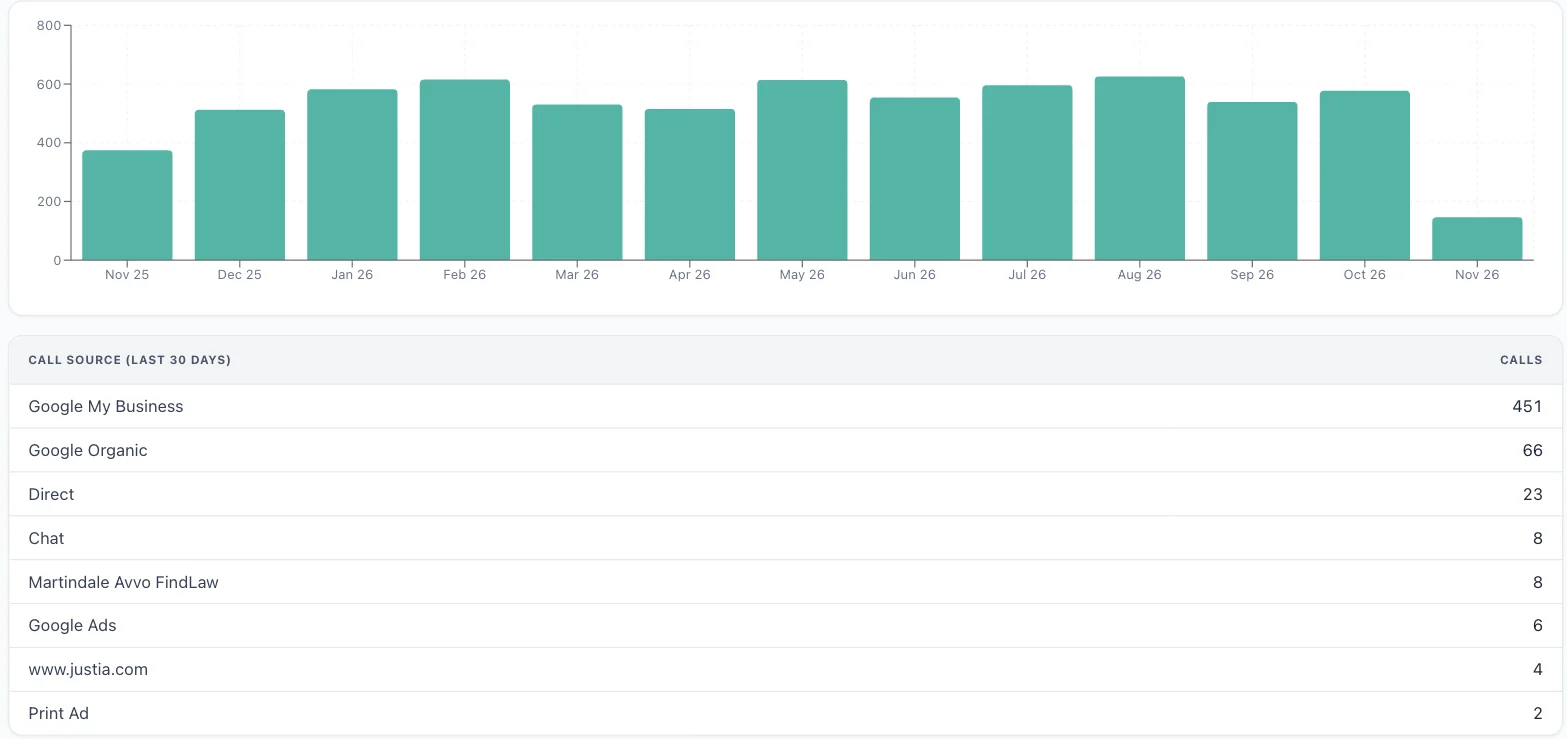
When a prospect tells me SEO sucks, I agree. Then I show them the search results page and explain why.
Then I talk outcomes. "I can get you leads for $50 each. How many leads does it take you to sign a client? Ten? That's a client for $500."
Compare that with "There are 1,000 searches a month, you'll get mentioned, but I can't really track it." One of those is an easy yes.
Stop putting SEO on a pedestal. The only thing that matters is your client. We'll do whatever it takes to get them results, even cut our retainer.
Stages 2 and 3: Agency of Record, Then Fractional
Stage 2 is becoming the one agency that handles everything that brings a client customers. Stage 3 is the fractional model that follows.
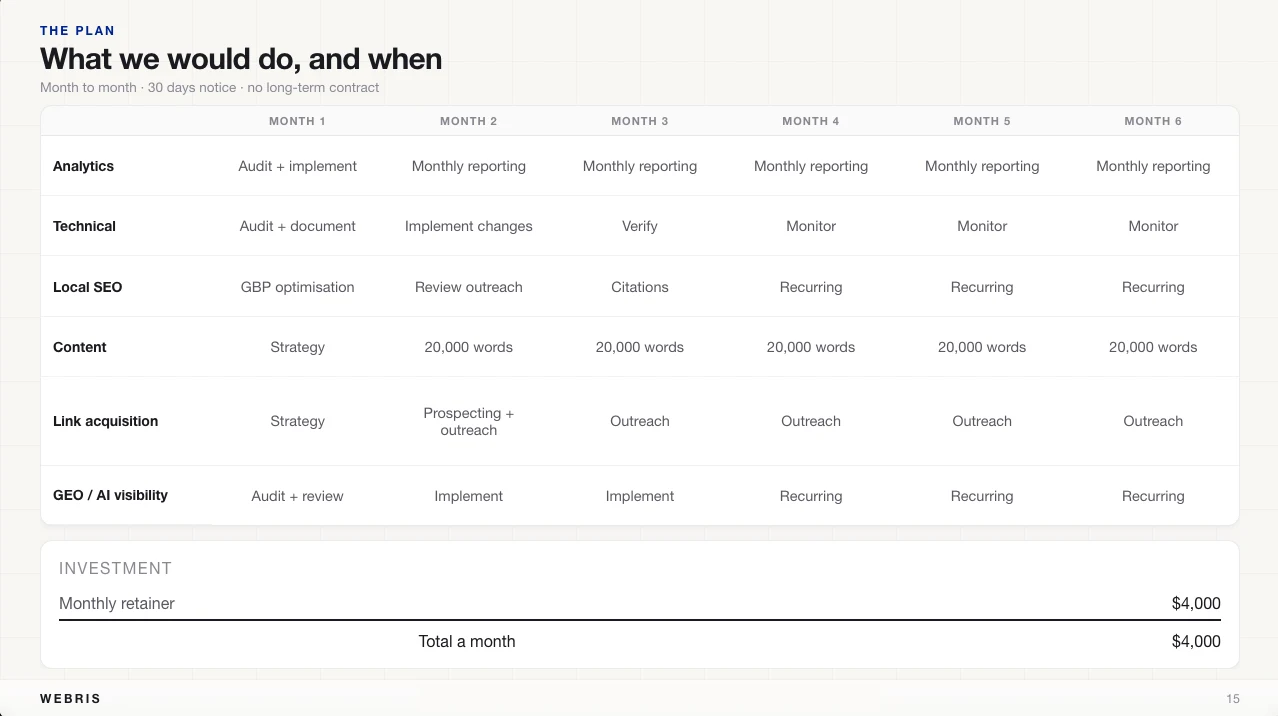
We're already in Stage 2. Our offer is now a flat retainer of $5,000 to $7,000 a month covering Google Ads, Facebook ads, SEO, local SEO, content, website design and management, CRO, PR, email and CRM.
Clients are overwhelmed by AI. They want one agency that says: "We've got it covered."
And AI makes the service better, not more generic. We build custom websites and systems fit to each business, instead of another WordPress theme.
Stage 3 is where it goes next. Think fractional CMO. You, the expert, a few department heads and an AI stack trained on your expertise.
The Claude setup I've used for a year and a half knows how I work. If a client values my expertise, they'll pay to license my agent stack, with me managing and improving it.
That also means fewer people. I don't plan on firing anyone; we have 20-plus people and they're great. But we haven't needed to hire this past year, even while growing. We're having our best year ever because we moved before the market forced us to.
Future of SEO FAQs
Is SEO dying? SEO as a standalone service is getting harder to sell. Search isn't going away, but fewer searches end in a click, and AI is automating SEO work. Agencies that pair SEO with paid search and sell outcomes are still growing.
What will SEO look like in 5 years? More searching will happen through AI assistants that know the user and recommend a short list of businesses. Rankings and traffic will matter less, and being the business an AI recommends will matter more.
Will AI replace SEO agencies? AI will replace much of the manual work, like audits, reporting and first drafts. It won't replace the strategy, the client relationship or the judgment about what to approve. Agencies that use AI to deliver will replace the ones that don't.
What should SEO agencies do right now? Productize SEO for one type of client, deliver it with AI, add PPC and Local Service Ads through a contractor, and sell leads and customers instead of rankings.
What industries are safest for SEO agencies? Local businesses with high customer values that people still search for and AI can't replace, like roofing, HVAC, plumbing and electrical.
Build Your Agency for What's Next
Blueprint members get the full playbook: how to sell, price and deliver blended search, the One-Person Agency training and Agency OS to run it with AI.
Join The Blueprint Training →